Christmas Lighting
Lighting Walkways and Landscape Beds for the Holidays in Snowy Cincinnati Winters
New Age Lights • November 2026 • Cincinnati, OH • 7 min read
Short Answer: Lighting walkways and landscape beds adds warmth and safety to a Cincinnati holiday display, but snow, ice, salt, and shoveling all affect how those lights should be placed. Stakes should go in before the ground freezes, lights should sit back from the edges of walks and driveways where shovels and plows work, connections should stay above the snow line and away from meltwater, and salt should be kept off lights and plants. Done well, landscape lights like starbursts, lit shrubs, and walkway lights glow above the snow all season.
A glowing roofline is the first thing people notice from the street. But in a Cincinnati winter, the lights closer to the ground matter just as much. Lit walkways help guests find the door safely after dark, and lit beds and shrubs make the whole yard sparkle against the snow.
Snow, ice, and salt also make landscape lighting trickier than it is in milder climates. Here is how to light walkways and beds so they look great and hold up through the season.
Why Walkway and Bed Lighting Matter
The roofline outlines the house. Landscape lighting fills in the scene at eye level, where guests actually walk. In winter, when it gets dark early, lit walkways and steps also make the approach to the house safer.
Starburst Stake Lights
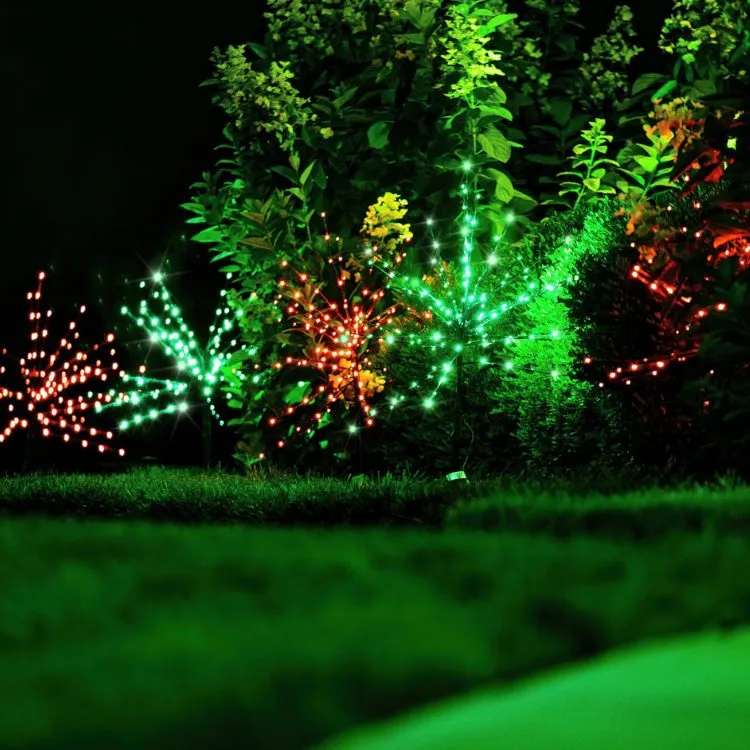
Starburst stake lights, like the red and green lights pictured here, add sparkle to beds. Placed at different heights among shrubs, they create a layered, fireworks-like effect that looks especially striking above a layer of fresh snow.
Lit Shrubs
Net lights or strands over evergreen shrubs, like boxwoods, yews, and hollies, give an even glow and stand out beautifully against snow, especially along the foundation.
Walkway Lights
Low stake lights or strands along the edges of the front walk create a welcoming path from the driveway or sidewalk to the front door.
Curving Walks and Long Approaches
Many homes on larger lots in Indian Hill and the east side have long, curving walks or approaches from the driveway. Placing lights at each turn helps define the path, especially when snow covers the edges.
Wrapped Trees Near the Walk
A small tree near the walkway, wrapped from trunk to branches, adds height and draws the eye toward the door. Ornamental trees like Japanese maples and redbuds work well.
Set Stakes Before the Ground Freezes
In Cincinnati, the ground can freeze hard in December and January, sometimes several inches deep. Stakes for landscape lights should go in before the ground freezes, when they can be pushed in firmly. Stakes driven into frozen ground often bend or break.
Keep Lights Back From Shovel and Plow Zones
Shovels, snow blowers, and plows can easily damage lights placed too close to walkways and driveways, often without anyone noticing until evening. Placing walkway lights a few inches back from the edge, or inside the bed rather than along the hardscape, protects them. If a snow removal service plows your driveway, let them know where lights are.
Snow Piles
Snow shoveled off walkways and driveways piles up along the edges, often right where landscape lights sit. Planning where snow will be piled, and keeping lights away from those areas, keeps them visible and undamaged.
Salt and Ice Melt
Rock salt and ice melt can corrode light fixtures and connections and damage shrubs and turf. Keep salt off lights and plants, apply it sparingly on walkways, and avoid shoveling salty snow onto beds, where it can burn shrubs.
Connections Above the Snow Line
Connections between strands and extension cords should sit off the ground and above the expected snow line where possible, and away from areas where meltwater collects. Weatherproof covers help.
GFCI Outlets
Outdoor lights belong on outlets with ground fault protection. Snowmelt and rain can trip a GFCI outlet. If landscape lights go out after a storm, check the outlet and press reset.
Ice on Walkways
Ice on walkways is a real winter hazard in Cincinnati. Walkway lights help guests see where the path is, but they do not replace clearing and treating the walk. Keep walks shoveled and lightly salted, and keep salt off lights and beds.
Lights in Containers
Containers on porches and steps can hold small lit trees, lit spheres, or winter greenery. Because containers sit above the snow, lights in them stay visible even after a big storm.
Heated Walkways and Snowmelt Systems
Some homes have heated walkways or snowmelt systems. Lights near those areas should be placed so they are not exposed to constant meltwater.
Steps and Railings
Lighting steps and railings helps guests navigate safely after dark. Lights along railings should be secured so they do not interfere with gripping the rail, and lights on steps should stay out of the walking surface.
Uplighting Trees and Walls
Uplighting fixtures at ground level can be buried by snow. Placing them where they will stay visible, or clearing snow from them after a storm, keeps them glowing on stone walls, columns, and tree trunks.
Front Entry Accents
The front door is where the walkway ends. A lit wreath, garland around the frame, and lit planters on the steps create a welcoming finish to the path.
Lighting for Older Guests
Holiday gatherings often bring grandparents and older relatives. Well-lit walkways and steps, free of cords and ice, make arrival easier and safer for everyone.
Choosing Colors
Warm white walkway lights feel welcoming and pair well with a warm white roofline. Red and green accents in the beds add festive color. Against snow, both warm white and color stand out beautifully.
Timers
Every job includes a timer, so landscape lights turn on and off with the roofline every evening.
Kids, Pets, and Sleds
Kids playing in the snow and pets running through the yard can trip over or pull out landscape lights. Keeping lights in beds and along edges, rather than in open lawn, protects them.
Mailboxes and Lamp Posts
A lit mailbox post or lamp post at the end of the walk helps guests find the house and extends the display to the street. Keep them clear of plow paths.
Driveway Markers
In snowy weather, lit driveway markers can double as plow guides, showing where the edges of the drive are. Reflective or lit markers placed before the ground freezes help snow removal crews avoid lawn and beds.
Plants Under Snow
Evergreen shrubs carry snow well, but heavy snow can bend branches under net lights. After a heavy snowfall, gently brushing snow off lit shrubs from below helps protect both the plants and the lights.
Layering Heights
Low lights along walkways, mid-height lights in shrubs and starbursts, and taller wrapped trees or uplit walls create depth. Against snow, those layers stand out even more.
Takedown Timing
Landscape lights come down in January along with the roofline. If the ground is frozen, stakes may need to wait until a thaw, since pulling them from frozen ground can damage plants and lights.
Permanent Roofline, Seasonal Landscape
Homeowners with permanent roofline lighting often add seasonal landscape lights each December. The permanent system can be set to warm white or holiday colors to complement the beds.
What a Winter Landscape Display Looks Like
Imagine this. It is a snowy December evening. The roofline glows warm white, the front walk is lined with soft lights a few inches back from the shoveled edge, red and green starbursts sparkle above the snow in the beds, and the boxwoods by the door glow. Guests arrive safely, and the whole yard looks like a holiday card.
What to Do Next
Before the ground freezes, place stakes firmly, keep walkway lights a few inches back from shovel and plow zones, and plan where snow will be piled. Keep connections off the ground and away from meltwater, keep salt off lights and plants, and check GFCI outlets after storms.
New Age Lights of Cincinnati serves Madeira, Hyde Park, Indian Hill, Blue Ash, and Cincinnati's east side. Call (513) 713-0490 or request a free quote.
Here is what to expect. We will walk the roofline with you, talk through the look you want, and tell you plainly whether permanent or seasonal lighting is the better fit for your house before anything goes up.