Christmas Lighting
Permanent Lighting on Older Cincinnati Homes: Brick, Stone, Deep Eaves, and Unusual Trim
New Age Lights • November 2026 • Cincinnati, OH • 7 min read
Short Answer: Many older Cincinnati homes, in neighborhoods like Hyde Park, Madeira, and parts of Indian Hill, have brick and stone exteriors, deep eaves, decorative trim, slate or tile roofs, and rooflines broken into many sections. Permanent lighting can work beautifully on some of these homes, especially those with long, continuous fascia, but not every older house is a good fit. The deciding factors are usually the trim profile, the roofline's continuity, and whether the track can run cleanly without exposed wire. Where permanent does not fit, seasonal lights often look better.
Cincinnati's older neighborhoods are full of character. Brick Tudors and colonials in Hyde Park, stone homes along winding streets in Indian Hill, and solid mid-century houses in Madeira all have details that newer homes rarely match: deep eaves, decorative trim, slate roofs, and rooflines that step and turn.
Those details make older homes beautiful to light. They also make the question of permanent lighting more interesting. Here is how to think about permanent lighting on an older Cincinnati home.
What Permanent Lighting Needs
A permanent lighting system is a set of LED lights mounted in a low-profile track along the trim at the roof edge. It stays on the house year round and is controlled from an app. We install JellyFish permanent lighting in the Cincinnati area.
For a permanent track to look right, it needs a continuous edge to ride along, typically the fascia board below the shingles. That is the first thing we look at on an older home.
Long, Continuous Fascia
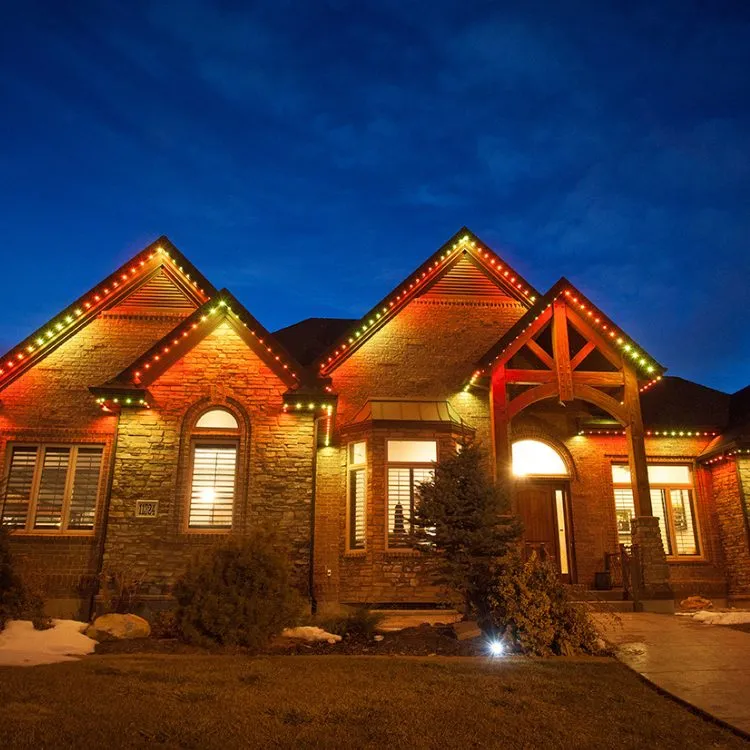
Older homes with long, straight fascia boards, such as many brick ranches, colonials, and mid-century homes, can be excellent candidates. The home pictured here, with brick and stone and long gable lines, shows how a permanent system can trace every peak cleanly.
Deep Eaves and Overhangs
Some older homes have deep eaves with wide soffits. Depending on how the trim is built, the track may mount along the fascia, at the soffit, or not at all. A careful look at how the eave is constructed tells us whether the track will sit cleanly and be visible from the street, or whether the lights would be hidden in the shadow of the overhang.
Decorative Trim and Crown Molding
Older homes sometimes have decorative trim, crown molding, or brackets along the roof edge. A track should not hide or damage those details. In some cases, the track can be tucked behind or below decorative trim. In others, seasonal lights are the better way to highlight the architecture.
Slate and Tile Roofs
Slate and tile roofs are common on some of Cincinnati's older homes. A permanent track mounts to the trim, not the roofing, so it can work on homes with slate or tile, as long as the trim supports it. Seasonal lights on slate and tile roofs require extra care, since clips on fragile roofing need to be chosen carefully.
Rooflines Broken Into Many Sections
Many older homes, especially Tudors and cottages, have rooflines broken into many short sections, with dormers, cross gables, and steep peaks. A permanent track across every short section can cost a lot for the light it gives. On those homes, a carefully planned seasonal display may look better and make more sense.
Exposed Wire
If the only way to reach part of the house with a permanent track is to leave wire exposed, we would rather hang that part each season than leave a wire showing all year. Clean installations matter even more on older homes, where details are part of the charm.
Brick and Stone
Brick and stone exteriors look beautiful under permanent lighting. Warm white along the eaves brings out the warmth of the brick, while holiday colors, like the red, green, and white in the photo, make the façade glow.
Gutters on Older Homes
Older homes may have half-round or built-in gutters, which affect where a track can sit and how the lights shine from the street. We look at the gutter style during the consult.
Wood Trim Condition
On older homes, trim condition matters. Soft or rotted fascia should be repaired before a permanent track is installed. Painting trim before installation is also a good idea, since the track will sit along it for years.
Mature Trees Near the House
Older lots often have mature trees close to the roofline. Branches that overhang the eaves can drop debris onto the track and block the view of the lights. Trimming overhanging limbs before installation helps the system look its best.
Historic Districts and Guidelines
Some Cincinnati neighborhoods have historic guidelines or HOA rules about exterior changes. A permanent track is a lasting change to the exterior, so it is worth checking guidelines before installation.
Installation on Older Homes
Installing permanent lighting on an older home often takes more planning, since every peak, transition, and trim detail needs attention. A typical install takes one to two days, with complex rooflines on the longer end.
Lifts and Access
Older homes on mature lots may have trees close to the house, narrow side yards, or slopes that limit ladder placement. On some jobs, a lift is the safer and faster tool, and on others, the crew works from the roof, tied off. That decision is made during planning.
Preserving the Look in Daylight
On older homes, the daytime appearance matters as much as the nighttime glow. Neighbors and visitors see the house in daylight far more often than at night. A track that sits neatly along the trim, color-matched and straight, preserves the home's character.
Everyday Accent Lighting
On older homes, a soft warm white along the eaves on ordinary evenings can highlight architectural details beautifully and add curb appeal at night.
Seasonal Lights Are Still a Great Choice
For many older homes, seasonal lights remain the best way to celebrate the holidays. They can be planned around every gable and dormer, use classic large bulbs, and come down in January, leaving the house exactly as it was.
Dormers and Cross Gables
Dormers and cross gables add charm but create many short runs and transitions. Each transition takes more time than a straight run, and on a permanent system, each adds cost. On homes with many dormers, it often makes sense to light the main rooflines permanently and leave the dormers dark, or to choose seasonal lights for the whole house.
Chimneys and Parapets
Some older homes have prominent chimneys, parapets, or stepped gables. Those features can be highlighted with uplighting rather than roofline lights, which avoids running track across complicated shapes.
Matching Track Color to Trim
On older homes with painted trim in white, cream, black, or dark green, matching the track color to the trim helps it disappear during the day. That detail matters more on historic homes, where the exterior is part of the neighborhood's character.
Making the Decision
The easiest way to decide is to walk the house together. We point out which runs suit a permanent track and which do not, and tell you plainly if seasonal lights make more sense.
What the Right Fit Looks Like
Imagine this. On a quiet street in Madeira, a 1960s brick home glows warm white along every eave on a February evening, then red, green, and white in December. Down the road, a steep-roofed Hyde Park Tudor glows with classic seasonal C9s for the holidays, then returns to its usual look in January. Both look right, because each got the lighting that fit the house.
What to Do Next
Look at your home's trim from the street and note whether the fascia runs in long, continuous lines, whether there is decorative trim or crown molding, and what kind of roof and gutters you have. Check any historic or HOA guidelines, and ask an installer to walk the house with you before deciding.
New Age Lights of Cincinnati serves Madeira, Hyde Park, Indian Hill, Blue Ash, and Cincinnati's east side. Call (513) 713-0490 or request a free quote.
Here is what to expect. We will walk the roofline with you, talk through the look you want, and tell you plainly whether permanent or seasonal lighting is the better fit for your house before anything goes up.