Permanent Lighting
What Does Permanent Lighting Cost in Cincinnati?
New Age Lights of Cincinnati • October 2026 • Cincinnati & Deer Park, OH • 7 min read
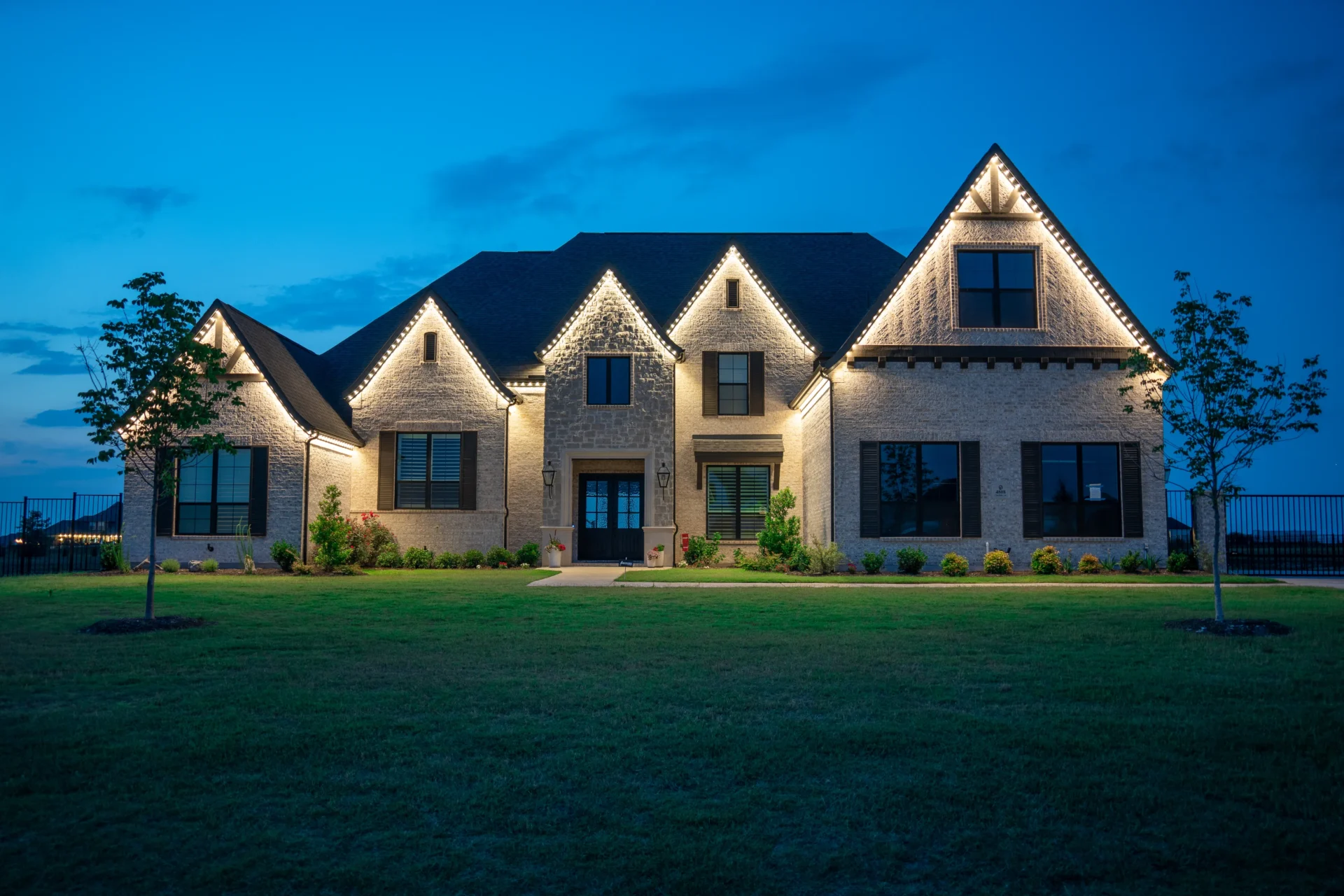
Short Answer: Permanent lighting is priced by linear foot of installed track. For a typical Cincinnati area home, front elevation projects commonly run $3,500 to $7,000, with full perimeter installations on larger homes climbing from there. Older Cincinnati architecture is a real variable, because Victorian, Tudor, and early twentieth century homes carry considerably more roofline per square foot than a modern build. Against annual seasonal installation, break even commonly falls somewhere in the four to seven year range.
Permanent lighting is a larger number than most people expect on first inquiry and a smaller one than they expect once they compare it against what they have been spending. Both reactions usually occur in the same conversation.
Here is what these systems cost around Cincinnati, what drives the number on the housing stock in this area specifically, and the comparison that determines whether it makes sense for a given household.
How It Is Priced
The unit is linear foot of installed track, and that figure covers the channel, the fixtures, wiring back to the transformer, the controller, mounting, and labor at height.
What varies is how much roofline you are lighting. That follows architecture rather than square footage, which is why two houses with similar interior space can quote very differently.
For a typical Cincinnati area home doing the front elevation, projects commonly land between $3,500 and $7,000. Full perimeter coverage on larger or more complex homes climbs from there.
Transformer and controller are generally included in a quote rather than separate, though a larger installation may require additional capacity and that should be stated rather than discovered.
Older Architecture Changes the Math
This matters more in Cincinnati than in most markets and it is worth understanding before comparing quotes to figures you read elsewhere.
A great deal of the housing stock across the older Cincinnati neighborhoods was built in the late nineteenth and early twentieth centuries, and that architecture is roofline rich. Victorians, Tudors, and foursquares carry gables, dormers, turrets, varied heights, and detailed trim that a modern build simply does not have.
Every one of those features adds linear footage, and more importantly adds transitions. A straight run is fast. A gable meeting a dormer meeting a change in roof height is slow, and that labor is real.
The result is that an older home of modest square footage can quote higher than a larger newer home in a Mason or West Chester subdivision. That surprises people and it is not a pricing error.
The compensating factor is that those homes have far more for the product to work with. Lighting that follows the architectural lines of a well built older home produces a considerably better result than the same system on a plain roofline, so the higher cost buys a bigger effect.
Steep pitch is the other factor common on this housing stock. Older Cincinnati roofs tend to be steeper than modern construction, which slows the work and raises the safety requirement.
What Else Drives the Number
Beyond linear footage and complexity, three factors move a quote.
Height is the largest. Two and three story elevations require more equipment, more repositioning, and more caution, and three story homes are common in the older neighborhoods here.
Access matters on urban and hillside lots. Cincinnati has a great many properties on slopes, with limited setback, tight side yards, or a rear elevation that is effectively another story below the front. Where equipment cannot be positioned easily, the work takes longer.
Trim finish is usually straightforward, though the painted wood trim common on older homes in a non standard color may require custom channel matching, which is worth raising on the first call.
The Comparison That Matters
Judged alone the number looks like a large discretionary purchase. Judged against what it replaces, it changes for a meaningful share of households.
Professional seasonal installation is an annual recurring cost covering design, materials, install, in season service, and January removal. It repeats indefinitely and tends to rise over time.
Permanent lighting is front loaded instead. Pay once, and ongoing cost is electricity, which on LED at moderate brightness is negligible.
Break even commonly lands in the four to seven year range depending on the size of both figures. After that the system produces value at no recurring cost, and it has been producing everyday value the whole time.
In this climate that everyday value is larger than in a southern climate, because the dark season is longer.
The January Factor
Something specific to northern climates belongs in the comparison and it rarely appears in a quote.
Removing seasonal lights from a roofline in Cincinnati in January means working in cold, on potentially icy surfaces, in short daylight. That is genuinely unpleasant work and it is why seasonal removal sometimes slips into February.
If you do your own lights, this is the part of the annual cycle people dread, and it carries real injury risk. Ladder work on an icy January roofline is where holiday decorating accidents happen.
If you pay for it, that removal labor is priced into what you pay, and it is more expensive here than it would be in a mild market for the same reason.
Eliminating that job entirely is part of what a permanent system buys, and for some households it is the deciding factor rather than the arithmetic.
Operating Cost
This surprises people favorably.
LED draw is low enough that running a full roofline nightly adds a modest amount to a power bill rather than a noticeable one, and running at reduced brightness for everyday use draws less still.
There is no annual service cost the way there is with seasonal installation. No November install visit, no January removal visit, no storage occupying garage space through the year.
Maintenance over the life of the system is limited, and where something fails it is typically a section rather than a whole run, which is a warranty conversation rather than a replacement. Worth confirming before purchase that individual sections can in fact be replaced, since not every system is built that way.
Where to Spend and Where Not To
Two pieces of guidance that save money without hurting the result.
Light the lines that define the house rather than every edge. On the ornate older architecture common here that discipline matters more than usual, because there are so many possible lines that lighting all of them produces visual noise rather than emphasis.
Start with the front elevation and phase the rest. Ask specifically that the controller be sized with capacity for expansion, since most homeowners who begin with the front later want more.
Where we would not economize is component quality. Plastic channel, poorly sealed fixtures, and unsealed fascia penetrations are cheaper on installation day and considerably more expensive after several Ohio freeze and thaw winters.
Phasing Through the Winter
One timing note specific to this climate.
Installation is roof and ladder work, and Cincinnati weather limits the workable window more than it does further south. Fall is the busy season and the practical window narrows considerably once winter sets in, since crews cannot safely work an icy roofline.
That produces a longer off season here than further south, which cuts both ways. Booking for this holiday season means acting well before the weather turns. Booking for spring means a genuinely unhurried installation, better attention to detail, and better availability.
A homeowner installing in April gets the system running for the following autumn with seven months of everyday use first, and avoids competing for slots in a compressed fall calendar. In this climate the off season argument is stronger than in most markets.
What to Do Next
Pace your front rooflines roughly before requesting quotes so every estimate has a common basis and you learn quickly whether your expectations match your budget.
Total what you have spent on seasonal lighting over recent years, including removal, since that is the other half of the comparison.
Decide honestly whether you will run an everyday setting through the winter, because in this climate that answer changes the value of the purchase substantially.
When comparing quotes, ask about channel material, fixture sealing rating, how fascia penetrations are sealed, controller headroom, and whether the warranty covers labor.
To get a quote for your home, contact New Age Lights of Cincinnati at 513-713-0490 or visit https://newagelights.com/new-age-lights-of-cincinnati/. We serve Cincinnati, Deer Park, Blue Ash, Mason and the surrounding communities.