Permanent Lighting
Why Permanent Lighting Makes More Sense in a Four Season Climate
New Age Lights of Cincinnati • October 2026 • Cincinnati & Deer Park, OH • 7 min read
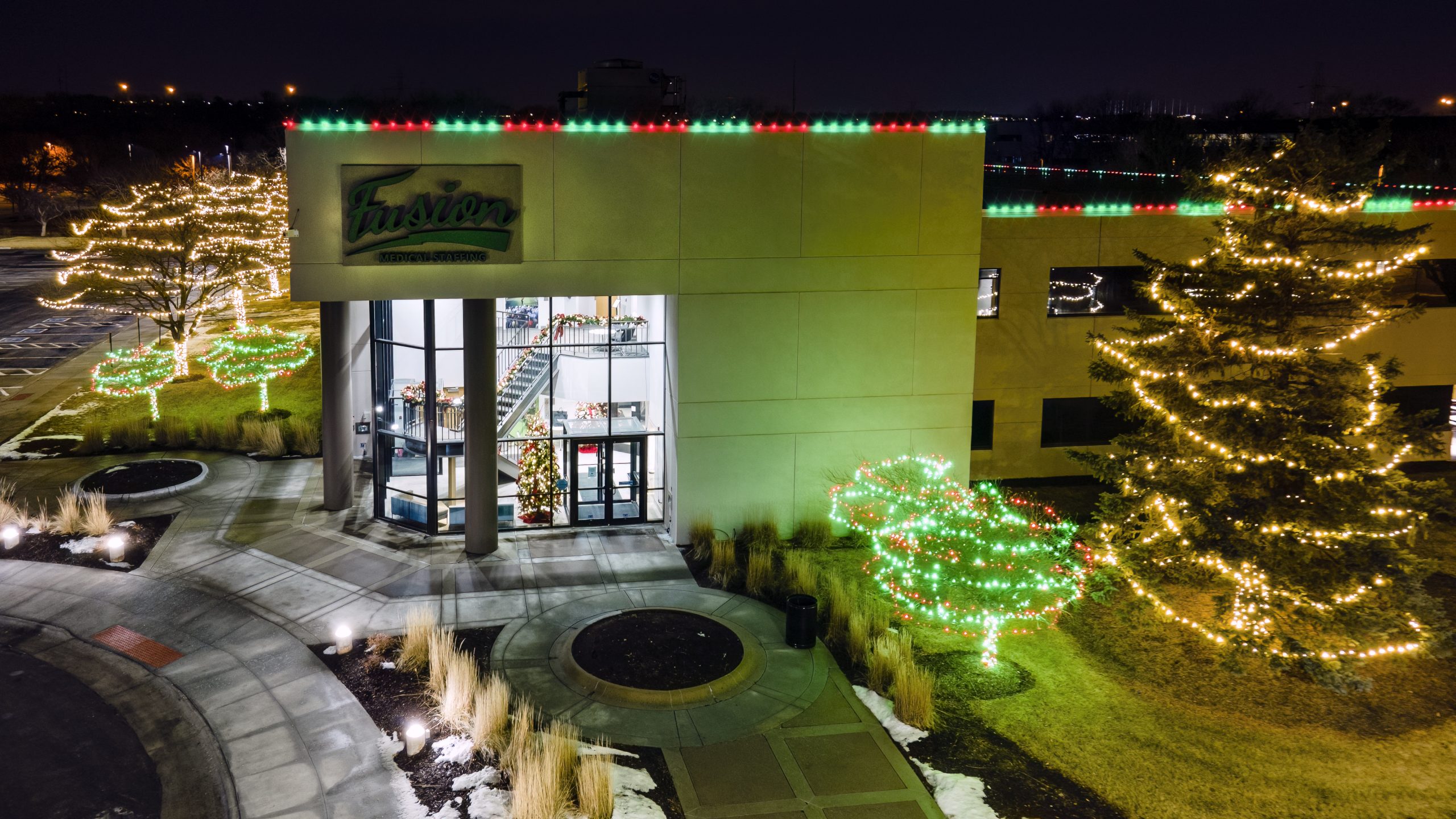
Short Answer: Cincinnati sits far enough north that the practical case for permanent lighting is stronger here than in warmer climates. From November through February the sun sets before most households finish the workday, so the exterior of the house is invisible during nearly every hour anyone is home to see it. A warm architectural setting running nightly restores four months of the year that would otherwise be spent looking at a dark facade, which is a different proposition than lighting for the holidays.
The pitch for permanent lighting is the same everywhere, and it lands differently depending on latitude. In a place with mild winters and late sunsets, it is a nice addition. Here it addresses something more concrete.
Cincinnati spends a substantial portion of the year in the dark during the hours people are actually at home. That fact changes what this product is for, and it is worth thinking about before evaluating anything else.
The Math on Daylight
Daylight contracts quickly here through October, and the clock change on the first of November compresses it sharply in a single weekend.
By December, sunset in the Cincinnati area arrives in the late afternoon. For a household with a standard workday, that means leaving in dim light and arriving home after dark, every day, for months.
The practical consequence is that the exterior of the house is simply not visible during the hours anyone is there to look at it. The brick, the architecture, the landscaping, the driveway approach, all of it disappears from roughly the beginning of November through the end of February.
That is four months, which is a third of the year. Further south the equivalent period is shorter and milder. Here it is the defining condition of half the calendar.
Overcast is the compounding factor. Cincinnati winters bring long stretches of grey, and an overcast late afternoon reads darker earlier than a clear one.
What a Dark House Actually Costs
This sounds abstract and it shows up in specific ways people recognize immediately.
Arriving home to a dark facade is different from arriving home to a lit one. There is no visual event, no sense of arrival, just headlights on a garage door.
From inside, windows become black rectangles. A room bounded by black glass feels smaller and more closed in than the same room with something visible outside it, and through a long Ohio winter that adds up.
Anything you have spent money on outside stops existing for a third of the year. Landscaping, a stone facade, a renovation, architectural detail. All of it is invisible from November to March.
And practical things get harder. Finding the house from the street, navigating a driveway, seeing steps and grade changes, and guests trying to identify which house is yours on a dark winter evening. On the hillside and winding streets common across older Cincinnati neighborhoods, that last one comes up more than people expect.
The Everyday Setting Is the Point Here
In warmer climates this is worth arguing. In Cincinnati it is the straightforward case.
A roofline running warm white at reduced brightness is exterior architectural lighting. It defines the shape of the house against the dark, emphasizes the lines someone designed, and makes the property visible during the exact months it otherwise is not.
That use runs every night rather than six weeks, and it is where the value of the system lives. A household that sets a warm scene on an astronomic schedule and lets it run gets something back every evening from November through February.
The contrast with a system used only in December is stark. Same hardware, same cost, and roughly six weeks of use instead of a hundred and twenty nights.
This is why we would push anyone in this market to think about the everyday configuration first and treat holiday scenes as an addition, rather than the other way around.
Snow Changes the Effect
A genuine advantage of this climate that warmer climates do not get.
Snow is highly reflective. A lit roofline over snow covered ground produces considerably more ambient light than the same system over bare grass, because the light bounces rather than being absorbed.
The visual result is that a modest setting reads brighter and softer during a snow, and the whole property picks up a glow rather than showing distinct points of light. It is one of the better looking conditions these systems produce and it is unavailable in milder climates.
Snow on the roof edge itself diffuses the fixtures slightly, which softens the line in a way that generally flatters the house. It is one of the few situations where weather improves the appearance of a lighting installation rather than working against it.
The practical implication is that brightness settings appropriate for a clear November night are frequently too high during a snow, which is an argument for having more than one saved scene.
The Holiday Season Runs Longer Here
A secondary point and a real one.
In a market where holiday lighting is installed in November and removed in early January, the display window is fixed by the labor rather than by preference. People take lights down when the crew comes or when the weather allows.
A permanent system removes that constraint entirely. Holiday scenes can run from whenever you like through whenever you like, and the transition back to an everyday setting is a tap rather than a January ladder in Ohio weather.
That January consideration is not trivial here. Removing lights from a roofline in Cincinnati in early January means ice, cold, and short daylight. Eliminating that job is worth something on its own.
What Else It Displaces Here
Two northern specific jobs disappear with a permanent system, and both are worth more here than in a mild market.
The November install is the first. Hanging lights in Cincinnati in late November means working in cold that has already arrived, on a schedule dictated by whenever the weather cooperates. Households who do it themselves know that the window between deciding to do it and it being genuinely unpleasant is short.
The January removal is the second and the worse of the two. Taking lights off a roofline in an Ohio January means cold, potentially icy surfaces, and short daylight, which is why so many displays stay up into February. A permanent system turns that job into changing a setting.
For older homeowners in particular, those two jobs are frequently the thing that prompts the conversation, ahead of any question about aesthetics or cost.
Cold Weather Is Not the Problem People Expect
Worth addressing early because it is the first objection in a northern market.
LEDs perform well in cold. Efficiency actually improves slightly at lower temperatures, and the diodes are unbothered by the range an Ohio winter produces. Heat is harder on LED longevity than cold is.
What the climate does stress is materials and sealing. Freeze and thaw cycling works at any gap repeatedly, which puts the emphasis on how fascia penetrations were sealed and what the channel is made of. Extruded aluminum handles thermal cycling that makes plastic brittle.
That is a component quality question rather than a reason to avoid the product, and it is the one to press an installer on in this market specifically. A system specified for a mild climate and a system specified for Ohio freeze and thaw cycling are not the same purchase, even when they look identical on installation day.
What to Do Next
Note what time it gets dark this week, and then think about what time you actually get home. For most Cincinnati households those two facts are about to overlap badly for four months.
Walk out front after dark and look at your own house. Whatever you can see now is what you will be looking at through February unless something changes.
If you decide to explore a system, prioritize the everyday warm setting in the design conversation rather than the holiday scenes. In this climate that is where the return is.
Ask specifically about channel material and penetration sealing, because freeze and thaw cycling here is harder on an installation than southern humidity is.
To discuss a design for your home, contact New Age Lights of Cincinnati at 513-713-0490 or visit https://newagelights.com/new-age-lights-of-cincinnati/. We serve Cincinnati, Deer Park, Blue Ash, Mason and the surrounding communities.