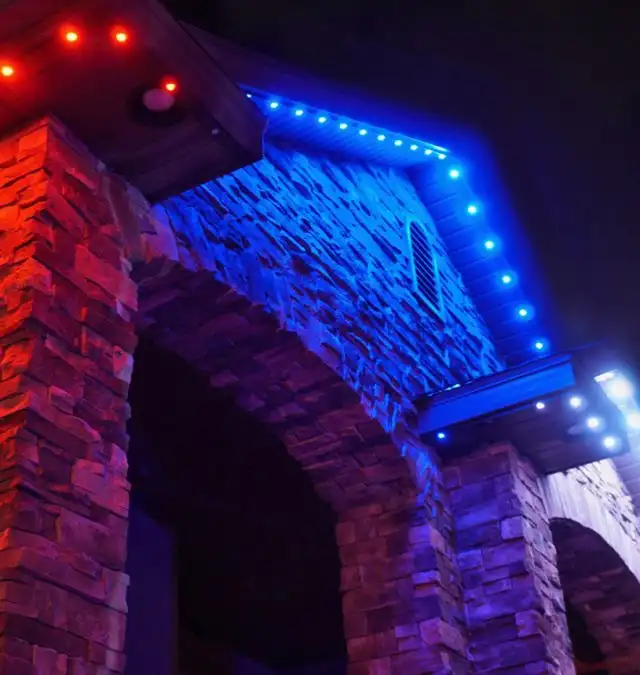
Permanent Lighting
Permanent Outdoor Lighting and HOAs in Cincinnati: Rules, Approvals and How to Get a Yes
New Age Lights • August 2026 • Cincinnati, OH • 7 min read
Why HOAs care, and what they usually ask
An architectural review committee is not trying to stop you having lights. It is trying to stop the house next door from looking like a storefront at noon, and it is applying a declaration that in most cases was written before app-controlled roofline lighting existed. Once you see it that way, the questions are predictable and the answers are mostly built into a professional install.
| Board concern | How it is usually phrased | How a professional install answers it |
|---|---|---|
| Daytime visibility | "No visible fixtures, conduit or wiring on the front elevation" | Aluminum track color-matched to the fascia or soffit; lights and wiring inside the channel; the run reads as trim from the sidewalk |
| Color | "White or soft white lighting only" or "holiday colors limited to the season" | Warm white as the saved default; colors as scenes for holidays and game days, scheduled back to white |
| Brightness | "Shall not create glare or spill onto adjacent lots" | Both systems dim; lights face down and out along the wall, not across the street |
| Hours | "Exterior decorative lighting off by a stated hour" | Sunset-to-set-time schedules in the app; nobody has to remember |
| Animation | "No flashing, chasing or strobing lights" | Static scenes for everyday use; slow patterns reserved for events and kept inside hours |
| Installation damage | "No penetrations of roofing materials" | Track fastens to fascia or soffit; nothing through shingles |
| Contractor | "Work by licensed and insured contractors" | Insurance certificate supplied with the application |
| Precedent | "What happens when everyone wants one" | Offer a written standard the board can reuse: matched track, white default, hours |
Where this comes up in the Cincinnati metro
Almost all the HOA questions we field come from the newer, straight-fascia housing that also happens to be the best fit for a permanent track. On the Ohio side that is Mason, West Chester and Deerfield Township in Warren and Butler counties, and the newer subdivisions around Fairfield. On the Kentucky side it is Florence and the Boone County growth, and Independence and the Kenton County subdivisions, where houses sit well back on rolling lots and a clean, even outline reads at distance.
These neighborhoods share a few traits that matter for the application. The trim is usually white, tan or a dark bronze, all of which have standard track color matches. The fascia is straight and continuous, so the track seats flush with no visible brackets. And there is often a neighbor two streets over who already has a system, which means the committee has usually seen one in daylight, which helps more than any paperwork.
Older neighborhoods inside the I-275 loop, Hyde Park, Oakley, Wyoming, Norwood, generally have no HOA on single-family streets. Condominium and townhome associations there are a different matter and follow the same process below.
What to submit
A complete packet the first time is the single biggest factor in getting a yes at the first meeting rather than a request for more information a month later. This is what we assemble for Cincinnati customers.
- The association's own form. Most declarations require an exterior modification or architectural change request. Use theirs, not a letter.
- Manufacturer spec sheet. For JellyFish Lighting from jellyfishlighting.com or for Bosso Smart Lighting from bosso.biz. Committees want to see a product page, not a description.
- Track color. The channel color and a note that it is matched to your fascia or soffit. A physical sample helps if the board meets in person.
- A marked photo of your house. Front elevation with the run drawn on, showing where it starts, stops and turns. If you are lighting a side elevation, include that too.
- Controller location. Usually the garage. Boards like knowing there is no visible box on the exterior.
- Statement of use. Everyday warm white on a sunset schedule, off by a stated hour, colors for holidays and game days. Write it plainly; it often becomes the condition of approval.
- Installer's certificate of insurance. We supply this.
- Daytime photos of a finished install. Preferably on a house with the same trim color. Our gallery has examples, and we can point you to a comparable local install.
How color-matched track answers the daytime question
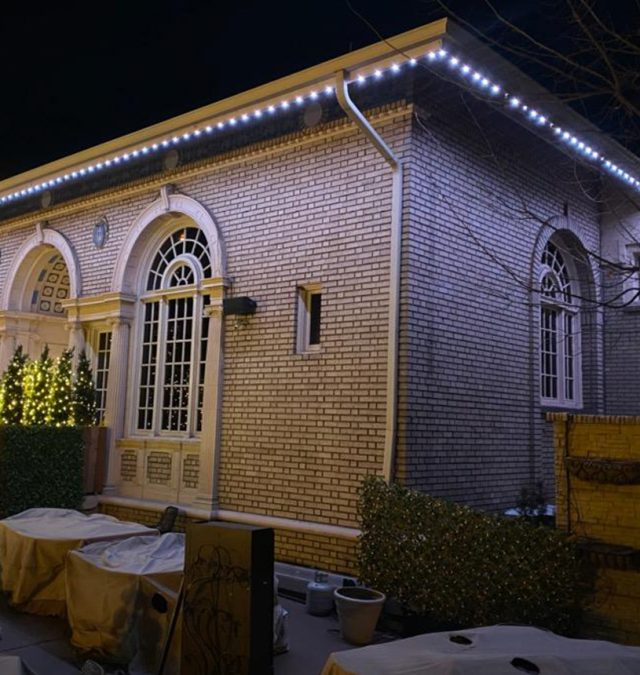
The concern behind most HOA hesitation is not the lit result at night. It is the fear of a stripe of white plastic or a row of clips along the roofline at noon. That is a fair concern about some products and about DIY strip kits stuck to the underside of a soffit. It is not what a professionally fitted, color-matched aluminum channel looks like.
The track is matched to the trim it sits against, fitted straight along the fascia or soffit, squared at every corner, with lights and wiring inside the channel. From the sidewalk it reads as a trim piece. The single most persuasive thing you can do at a committee meeting is show a daytime photo of the same trim color with the track fitted and ask the members to find it. Details on how the track mounts, and why nothing goes through the roofing, are in will permanent lighting damage my roof, soffit or fascia.
Getting to yes: timing and tactics
- Approve first, order second. Custom track takes one to two weeks to arrive, and most committees meet monthly. Get the approval before anything is ordered; it costs you nothing in schedule and everything if you skip it.
- Attend the meeting. A homeowner in the room with a photo answers questions a form cannot.
- Offer a demo. If a neighbor already has a system, invite the committee to look at it in daylight and at dusk. Both systems we install run warm white that passes for architectural lighting.
- Propose the standard. Committees worry about the tenth application, not the first. Offer written conditions they can reuse: color-matched track, white default, stated hours, no strobing. You will often find your conditions become the neighborhood rule.
- Get it in writing. Boards change. An approval letter with its conditions is what protects you in three years.
If the rules say no, or say nothing
Silence is not consent. If the declaration does not mention roofline or permanent lighting, submit an application anyway and ask for a written ruling; most committees treat it as an exterior modification like a light fixture or a trim change. If a declaration genuinely prohibits it, the options are an amendment, which needs a vote and time, or a designed seasonal display, which most declarations allow between set dates. We install both, and the consult is free either way, so bring the rules and we will design inside them rather than ask for an exception later. Our residential lighting page describes what a permanent install includes.
Historic districts are a different conversation
Over-the-Rhine is one of the largest historic districts in the country, and the Covington riverfront and MainStrasse blocks and Newport's older streets sit in their own districts. Exterior changes there go through a public review focused on the building fabric and its daytime appearance, not a private covenant, and the terms are things like a certificate of appropriateness or a review-board sign-off rather than an ARC approval.
The question is also different. An HOA asks whether the track is discreet enough. A historic review asks whether a permanent fixture belongs on a nineteenth-century Italianate cornice at all, and on many of those buildings the honest answer is no. A carefully designed seasonal display, fixed to the fascia line and removed in January, is usually the right product there, and we will say so at the consult rather than push a track that shows in daylight. Where a track can be seated genuinely out of sight, its reversibility, screws into trim and nothing through roofing, is the point to make.
For boards: lighting the entrance and common areas
The other side of this is the association as the customer. Entrance monuments, clubhouses, gatehouses and common-area frontage are some of the most common permanent-lighting projects we do, because they end an annual rehang and give the board holiday and event color from an app. Installs are scheduled so the entrance stays open, and larger properties are phased across visits. Our commercial and HOA lighting page covers the service, and commercial and HOA Christmas lighting in Cincinnati covers the seasonal version.
Frequently asked questions
Do HOAs allow permanent outdoor lighting?
Most do, subject to architectural review. The usual conditions are that the track is color-matched to the trim and discreet in daylight, that everyday use is a warm or soft white, that brightness is reasonable, and that colors or animation are limited to holidays, game days and set hours. Very few Cincinnati-area declarations prohibit it outright, but many were written before the product existed, so an application is normally required.
What do I submit to the architectural review committee?
The association's application form, the manufacturer spec sheet, the track color and a note that it is matched to your trim, a photo of your house with the run marked, the controller location, a statement of intended everyday use and hours, your installer's insurance certificate, and daytime photos of a comparable finished install. New Age Lights assembles this packet for Cincinnati customers.
Can an HOA make me take permanent lights down?
If you installed without a required approval, the association can usually require removal or a retroactive application, and the cost is yours. That is why the track should not be ordered until the approval is in hand. Custom track takes one to two weeks to arrive, so approval first costs you nothing in schedule.
What if my HOA rules do not mention permanent lighting?
Silence is not a yes. Ask the board in writing for a ruling or submit an application anyway; most committees treat it as an exterior modification like a fixture or trim change. Getting the answer in writing protects you when the board changes.
Are historic districts the same as HOAs?
No. In Over-the-Rhine, the Covington riverfront and MainStrasse blocks, and Newport's older streets, exterior changes go through a public review process focused on the building fabric and its daytime appearance, not a private covenant. On many of those buildings a permanent fixture is the wrong answer and a designed seasonal display is the right one.
Can an HOA use permanent lighting on its own entrances and common areas?
Yes, and many do. Entrance monuments, clubhouses and gatehouses are common permanent-lighting projects because they end an annual rehang and give the board holiday and event color from an app. New Age Lights schedules that work so entrances stay open.
Bring the rules to the consult
We design inside your association's guidelines from the start, assemble the application packet, and supply the insurance certificate and daytime photos the committee will ask for.
Get a free quote or call (513) 713-0490.